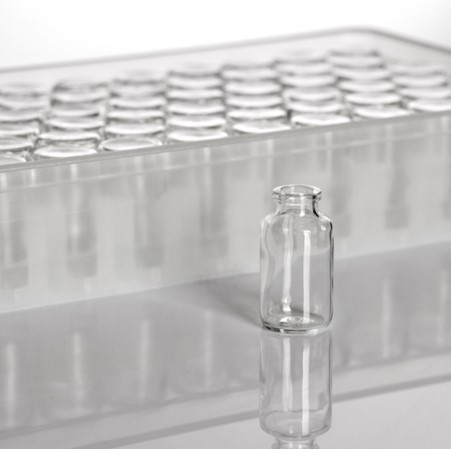
Covid-19 vaccine: pharmaceutical vial manufacturers also stepping up
Source: 13/11/2020 - www.zonebourse.com - AFP / AL
Paris (awp/afp) - As the first results for potential Covid-19 vaccines begin to be published, pharmaceutical glass producers are also gearing up in this race against time to meet exponential demand for vials.
The figures are staggering: billions of vaccine doses will be needed to vaccinate the world’s population. For the vaccine developed by US company Pfizer and German firm Biontech alone – which announced earlier this week that preliminary results showed 90% efficacy – 1.3 billion doses are expected to be produced next year.
Once the precious vaccine has been found, it still needs a container: like the drug makers, pharmaceutical packaging producers have also had to step up the pace.
“These are unprecedented times,” Andrea Zambon, Business Development Director at Italian group Stevanato, one of the leading producers of pharmaceutical vials, told AFP by email. Because of the pandemic, his company expects global demand to rise by two billion units by the end of 2021.
“This increase is mainly driven by vials (single-dose and multi-dose, accounting for 90% of demand). More recently, we have also seen growing demand for prefilled syringes,” Stevanato explains.
Annick Somers of Japanese group Nipro Group confirms: “Demand for vials has increased considerably. We are doing everything possible to accelerate our investment plans.”
Pressure on glass?
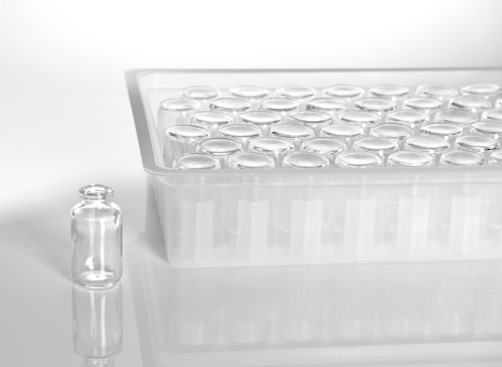
The vials in demand are mainly made using tubular glass technology. These are borosilicate glass vials – ranging from 2 ml to 10 ml – a proven solution for preserving vaccine stability, according to manufacturers. And they can sometimes hold several doses, points out German giant Schott, which says it will deliver enough containers for 2 billion vaccine doses.
This is one way of addressing a major logistical challenge: how to give the entire world population access to the vaccine?
If vaccination requires several doses per person, “there may not be enough glass vials available for a global campaign (...) aiming to distribute 12 to 15 billion doses,” warns Thomas Cueni, Director General of the IFPMA, the international federation of the pharmaceutical industry, contacted by AFP.
Under these circumstances, he argues, using multi-dose vials holding up to 20 doses per vial will help to “ease the pressure” on manufacturers.
Concerns about insufficient supply are shared by the Coalition for Epidemic Preparedness Innovations (CEPI), which says it “quickly identified a global shortage of the pharmaceutical glass vials (specifically tubular glass) needed”.
300 additional hires
Contacted by AFP, the drug makers in the vaccine race nevertheless sought to reassure, whether US companies Johnson & Johnson and Pfizer or French group Sanofi.
The same message came from US biotech company Moderna, which says it has “secured sufficient raw materials and components in advance” to supply 1 billion doses in 2021.
In any case, vaccine players did not wait for clinical trial results before placing orders. CEPI, for instance, has already ordered 100 million multi-dose vials from Stevanato.
Stevanato has also planned to increase its production capacity by 15 to 20% over three years and has already hired 300 additional people, in a group of some 4,000 employees.
Schott, for its part, says it has already signed agreements with major drug makers and delivered millions of vials for various programmes, including “Warp Speed”, the US operation coordinating vaccine development.
CEPI points out that new technologies, such as “vaccine pouches”, are being considered. Not to mention other players in the pharmaceutical glass packaging industry, such as French company SGD Pharma, which specialises more in molded glass and could position itself as an alternative solution.
“In the short term (...), it should be possible to guarantee sufficient production capacity to enable the administration of 2 billion doses,” sums up Thomas Cueni of the IFPMA.